LSZH Compound Testing and Certification: A Complete Guide for Cable Manufacturers
Hjem / Nyheter / Bransjenyheter / LSZH Compound Testing and Certification: A Complete Guide for Cable Manufacturers


Cable Material Qualification Guide
Qualifying a low-smoke zero-halogen (LSZH) compound for a new cable project usually starts with a stack of test reports that do not align: one shows IEC 60754-1 halogen content, another shows a CPR class, and none covers the rail hazard level the customer quoted. A structured testing and certification checklist closes that gap and shortens the qualification cycle.
An LSZH compound is a halogen-free flame-retardant polyolefin formulation that, when burned, releases no halogen acids, keeps smoke density below an agreed limit, and stops flame spread within a defined charred length.
The term LSZH stands for low-smoke zero-halogen, and the definition drives procurement decisions, not just chemistry. A material sold as LSZH must satisfy a measurable composition requirement, a measurable smoke requirement, and a measurable flame-retardancy requirement. Without test reports for all three, the material does not meet the definition.
Compound producers such as Hangzhou Meilin New Materials Technology Co., Ltd. design their LSZH grades around three validation pillars.
Every LSZH compound should be verified against four quantitative test methods before it enters a cable design: IEC 60754-1 for halogen content, IEC 60754-2 for gas acidity, IEC 61034 for smoke density, and IEC 60332 for flame spread.
The four tests work as a system. Halogen content confirms the halogen-free claim, acidity and conductivity measure corrosion damage, smoke density measures escape visibility, and flame spread determines whether a single cable fire becomes a cable tray fire.
| Test parameter | Test method | Typical acceptance limit | Property verified |
| Halogen acid gas content | IEC 60754-1 | ≤ 0.5% by weight | Halogen-free composition |
| Acidity of combustion gases | IEC 60754-2 | pH ≥ 4.3; ≤ 10 µS/mm | Corrosion potential |
| Smoke density | IEC 61034-2 | ≥ 60% light transmittance | Escape visibility |
| Flame spread | IEC 60332-1-2 | ≤ 425 mm charred length | Fire propagation resistance |
The same LSZH compound can carry different certificates depending on the end market, and the most common error is taking one standard's result and reading it as evidence of compliance with a different standard.
A compound that passes EN 45545-2 for railway applications is not automatically compliant with the European Construction Products Regulation (CPR). Each standard defines its own specimen configuration, aging schedule, and limit values. The table below maps the main certification families that cable buyers reference when specifying LSZH compounds.
| Sector | Standard family | Key requirement |
| European construction | EN 13501-6, CPR | Reaction-to-fire classes B2ca, Cca, Dca with smoke and droplet criteria |
| Railway | EN 45545-2 | Fire safety hazard levels HL1, HL2, HL3 |
| Marine and offshore | IEC 60092-360 | Fire retardancy plus smoke and temperature ratings |
| North America | UL 444, UL 1685 | CM, CMR, and plenum smoke limits |
| China building market | GB 31247, GB/T 19666 | Classes B1 and B2 for building wiring |
Because each sector maps to a different test set, buyers increasingly ask suppliers to document the full chain from raw pellet to test certificate. Our overview of international standard cable compounds explains how these requirements fit together across markets.
For communication cable builds, the thermoplastic LSZH flame-retardant sheath compound MLTH9001 is produced with halogen-free and smoke density data verified on each grade family, with grades oriented to B2ca, Cca, and Dca requirements.
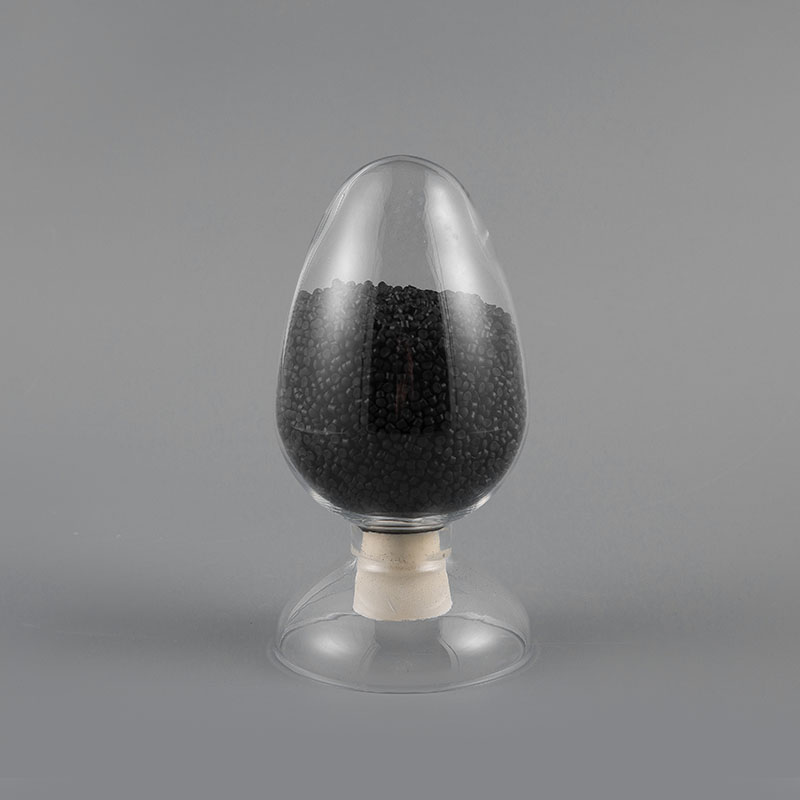 Wholesale ML-TH9001 Thermoplastic LSZH flame- retardant sheath material SupplierWe Are China Wholesale ML-TH9001 Thermoplastic LSZH flame- retardant sheath material Suppliers, Factory, Hangzhou Meilin New Materials Te...View Product →
A test report is only valid when the specimen preparation, the standard edition, and the laboratory method all match the claim being made.
Certificate numbers on a datasheet only prove that a test was done once, on one sample, in one laboratory. They do not prove that the production lot shipped to your plant has the same composition, which is why experienced project engineers now request the original third-party report, the standard edition, and the batch identity.
That is why Hangzhou Meilin New Materials Technology Co., Ltd. maintains an internal testing facility and documents its full verification setup on the in-house laboratory testing equipment page.
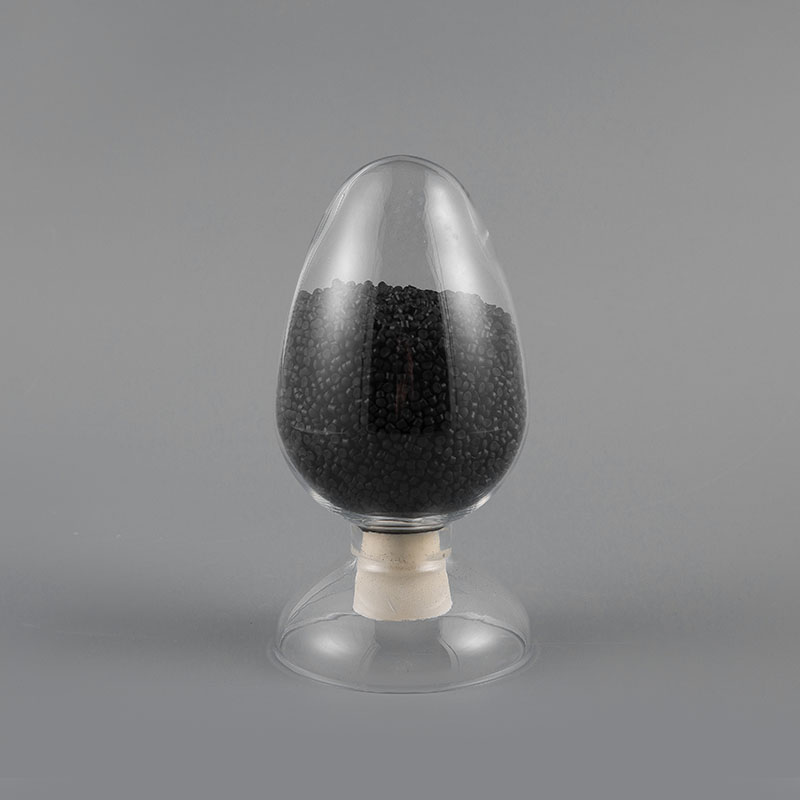
For building and power cable projects that need a higher fire class, the B1-grade thermoplastic LSZH sheath material MLH9001B1 is batch-tested for halogen content, smoke density, and flame spread before release.
Wholesale ML-H9001B1 Thermoplastic LSZH flame- retardant B1 grade sheath materiaWe Are China Wholesale ML-H9001B1 Thermoplastic LSZH flame- retardant B1 grade sheath material Suppliers, Factory, Hangzhou Meilin New Ma...View Product →Certificates certify a tested batch, never a brand, so reproducible production is what turns a one-off test result into a reliable material specification.
A compound that passes certification on a laboratory sample but fails on a production lot creates direct operational and legal exposure for the cable maker. The manufacturing base therefore becomes part of the audit. Suppliers with large, modernized production lines and documented quality management reduce that exposure.
For marine and offshore projects, the radiation-crosslinked marine LSZH sheath compound MLFH9002 is produced and batch-tested for marine-grade fire, smoke, and temperature requirements.
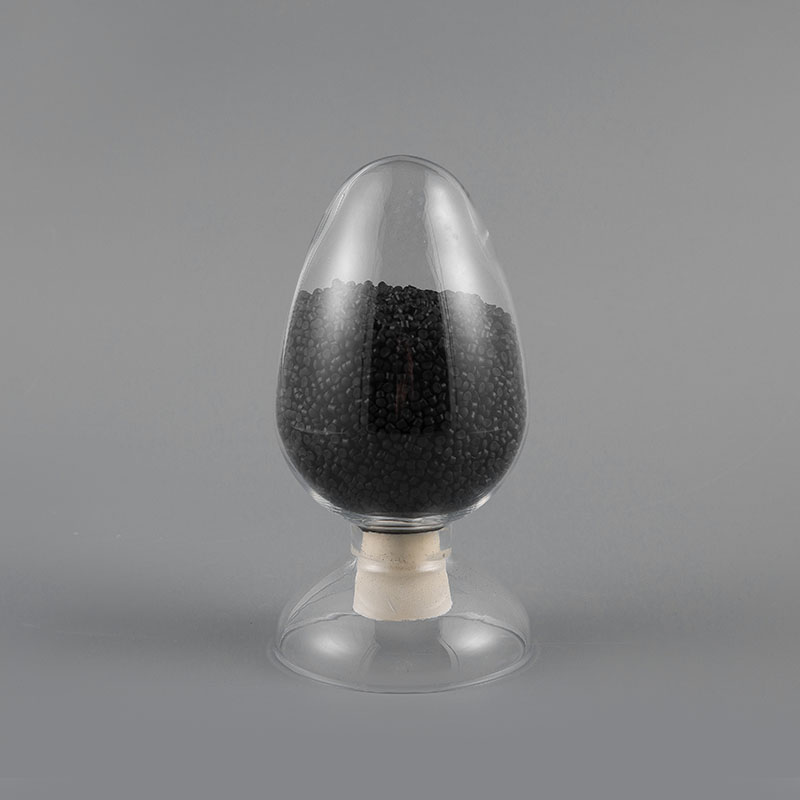 Wholesale ML-FH9002 90℃ irradiated halogen- free flame-retardant sheath materialWe Are China Wholesale ML-FH9002 90℃ irradiated halogen- free flame-retardant sheath material for marine cables Suppliers, Factory, Hangz...View Product →
No. Halogen-free flame retardancy is achieved mainly with metal hydroxides such as aluminum hydroxide (ATH) and magnesium hydroxide (MDH), which release water vapor above 200 °C and cool the burning zone. Halogen-free refers to the absence of halogen elements in the polymer and additive system, not to the absence of flame-retardant chemistry.
B1 and B2 are reaction-to-fire classes defined by Chinese standard GB 31247 for building cables. B2ca and Cca are European CPR classes defined by EN 13501-6 and evaluated through EN 50399. The test setups, measured parameters, and limit values differ, so the two systems cannot be compared directly.
Halogen content and smoke density should be verified on every production lot, because both are sensitive to raw material changes. Full fire tests, including CPR classification and bundle flame spread, are repeated when the formulation changes, at one-to-three-year intervals, or whenever the customer's certification body requires fresh data.
Sometimes yes, but not automatically. Railway (EN 45545-2) and marine (IEC 60092-360) requirements overlap on flame retardancy and smoke, but differ on thermal aging, oil resistance, and toxicity index values. The compound must be evaluated against each standard's complete requirement table.

Xingyu Street nr. 259, Lin'an-distriktet, Hangzhou City, Zhejiang-provinsen

+86-0571-63763088


KONTAKT OSS Kreativt prosjekt? La oss ta en produktiv prat.
Copyright © Hangzhou Meilin New Materials Technology Co., Ltd. Alle rettigheter reservert. Tilpassede produsenter av elektriske ledninger og kabelmaterialer
